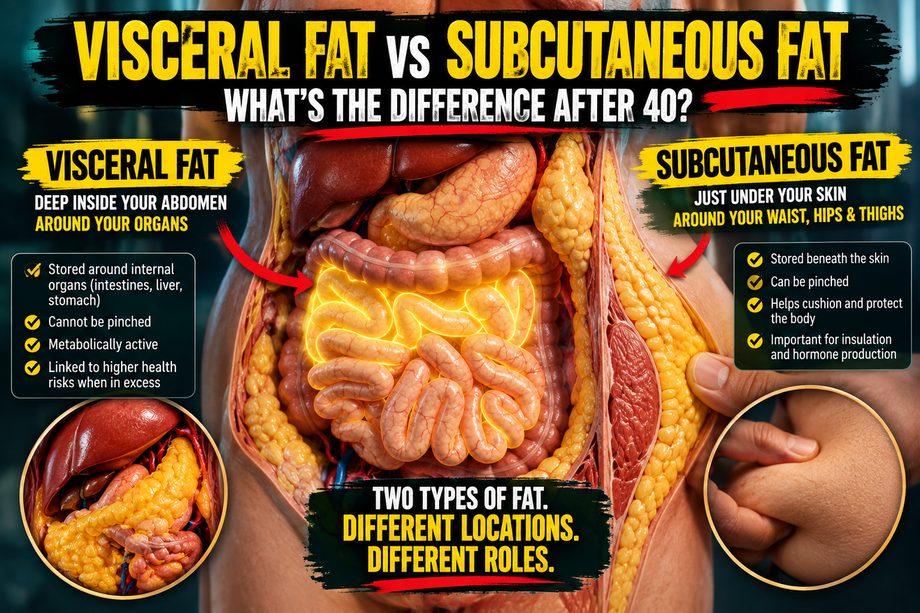
Visceral fat vs subcutaneous fat: these two types of body fat are stored in different places, and understanding the difference becomes especially important after 40. Where fat is stored inside your body can matter as much as how much is stored.
You may notice that your waistline changes as you get older, even when your overall body weight hasn’t changed very much.
But here’s something that isn’t obvious when you look in the mirror:
Not all abdominal fat is stored in the same place.
Your body stores fat immediately beneath the skin and deeper inside the abdomen. These two locations are associated with different biological functions and health considerations.
Understanding the difference can help you make better-informed decisions about your metabolic health.
Table of Contents
What Is Subcutaneous Fat?
Subcutaneous fat is the fatty tissue stored directly beneath your skin.
It’s the type of fat you can often gently pinch around your waist, thighs or upper arms.
This tissue has several important functions:
- It stores energy for future use.
- It helps cushion and protect the body.
- It contributes to insulation and temperature regulation.
- It produces hormones and other biological signals.
Subcutaneous fat is a normal and necessary part of the human body.
Although excess overall body fat can have health implications, subcutaneous fat and visceral fat should not be treated as interchangeable.
What Is Visceral Fat?
Visceral fat is stored deeper inside the abdominal cavity, around internal organs such as the intestines and liver.
Unlike subcutaneous fat, you cannot directly pinch visceral fat through your skin.
Visceral fat is biologically active. It produces and responds to hormones and other signalling molecules involved in metabolic regulation and inflammation.
Higher amounts of visceral fat are associated with an increased risk of several metabolic and cardiovascular conditions, including insulin resistance and type 2 diabetes.
However, having some visceral fat is normal. The concern is excess accumulation, not the mere presence of fat around internal organs.
Visceral Fat vs Subcutaneous Fat: The Key Differences
| Feature | Subcutaneous Fat | Visceral Fat |
|---|---|---|
| Location | Beneath the skin | Deep inside the abdomen |
| Can you pinch it? | Often, yes | Not directly |
| Biological activity | Yes | Yes |
| Main health consideration | Overall amount and distribution matter | Excess accumulation is strongly associated with metabolic risk |
| Can appearance measure it accurately? | No | No |
Both tissues have biological functions, and neither can be fully assessed from appearance alone.
Why Can Abdominal Fat Distribution Change After 40?
Body composition often changes with age.
Several factors can contribute:
1. Changes in muscle mass
Without sufficient physical activity, particularly resistance training, adults may gradually lose muscle mass as they age.
2. Hormonal changes
Age-related hormonal changes can influence how and where the body stores fat.
3. Changes in daily activity
Work, family responsibilities, reduced movement and changes in exercise habits can affect energy expenditure.
4. Sleep and lifestyle factors
Sleep patterns, nutrition, alcohol intake and other lifestyle factors can influence weight regulation and metabolic health.
Not everyone experiences the same changes, and turning 40 does not automatically mean someone will develop excess visceral fat.
Can You Have Visceral Fat Even If You’re Slim?
Yes.
Body weight and appearance do not reveal the complete picture of internal fat distribution.
Someone with a relatively low body weight may still have a higher proportion of abdominal visceral fat than expected.
Conversely, a larger waistline does not tell you exactly how much visceral fat is present.
Waist circumference can be a useful indicator of abdominal fat-related risk, but it is not a direct measurement of visceral fat.
Medical imaging methods, such as MRI or CT, can measure visceral fat more directly, although they are not routinely needed for most people.
What Helps Support Healthier Body Composition?
Evidence-based approaches include:
- Regular physical activity, including aerobic exercise and strength training.
- A balanced dietary pattern with sufficient protein and fibre.
- Consistent, adequate sleep.
- Limiting excessive alcohol intake.
- Managing relevant medical conditions with appropriate professional care.
There is no reliable way to choose precisely where the body loses fat through a specific exercise.
For example, abdominal exercises can strengthen abdominal muscles, but they do not selectively remove visceral fat.
The Bigger Picture: Your Weight Isn’t the Whole Story
Body weight is one measurement, but it doesn’t distinguish between muscle, fat, water and other body tissues.
That’s why metabolic health deserves a broader perspective.
Factors such as blood pressure, blood glucose, cholesterol, waist circumference, physical fitness and medical history can provide additional context.
If you’re concerned about your metabolic health, a qualified healthcare professional can help determine which assessments are appropriate.
Discover the Hidden Science of Belly Fat
Want to understand what’s happening beneath the surface?
Explore The Hidden Fat Report, our free illustrated educational guide to visceral fat, subcutaneous fat, metabolism and body composition after 40.
GET THE FREE HIDDEN FAT REPORT
Educational information only. No purchase required.
Frequently Asked Questions
Is visceral fat more dangerous than subcutaneous fat?
Excess visceral fat generally has stronger associations with several metabolic health risks. However, overall health depends on many factors, and subcutaneous fat also has important biological functions.
Does everyone over 40 gain visceral fat?
No. Age-related changes vary considerably depending on genetics, hormonal factors, activity, nutrition and other circumstances.
Can you tell if you have excess visceral fat by looking at your stomach?
Not reliably. Appearance and waist circumference may provide clues, but they cannot precisely measure visceral fat.
Do sit-ups burn visceral fat?
Sit-ups strengthen abdominal muscles but do not selectively burn fat in that location. Regular aerobic exercise and other sustainable lifestyle habits can help improve body composition.
For more educational resources about body fat, metabolism, and healthy aging after 40, explore our Research Library.
About this article: Published by The Fat Deception, an independent educational project exploring metabolism, body composition and healthy ageing through scientific research and visual storytelling.
Medical disclaimer: This article provides general educational information and is not a substitute for individual medical advice, diagnosis or treatment.
Leave a Reply